All posts
Work it, caveat it, review it, drop it: triaging the domains your visitor tool hands you
#case-study#lead-qualification#sales
If you run a BizDev or GTM service, your week starts with a list. Visitor identification deanonymizes the companies landing on a client’s site, engagement and lookalike signals stack on top, and someone — a rep, an automation, an account owner — decides which rows have earned attention.
The list arrives with one unchecked assumption baked in: that every domain on it is a real company, able to receive mail, and operated by the entity its name suggests. Most weeks that assumption is harmless. The tail is where it bites. A handful of rows are junk that cannot receive the outreach your sequence will send. A handful are brands a parent company quietly acquired, so the account routes to the wrong owner. And a handful are real companies sitting behind edge protection that lazy automation will misread or drop.
Those rows cost the two things a service like yours protects hardest: your best people’s hours, and your client’s trust in the report you hand them. When a client opens the weekly report and sees a company they know was acquired two years ago, or one that plainly is not a business, they do not file a ticket. They quietly decide the list is soft.
WhoisGenius is a domain-verification layer. You give it a domain; it reads that domain’s own present-day evidence — the registration record, DNS and certificate history, hosting, mail configuration, and the content of the site itself, including the copyright holder it names and the account-scoped analytics identifiers it loads — and returns one scored answer: who operates this domain right now, whether it can receive email, how long it has existed, and how strong the evidence is.
Three properties of that answer matter for a BizDev workflow:
confirmed means independent ownership signals corroborate and no serious rival survives. likely and possible say progressively thinner evidence. unattributable means exactly that — the system names no one rather than guessing, because a confident wrong answer on a real company is worse than no answer.Verification turns the weekly list into four piles, each with its own handling:
Work it. The evidence names a real operator, mail is configured, the domain has history. Enrich, personalize, route. And when the operator turns out to be a parent company, route to the parent account and note the subsidiary — that is the difference between pitching into the right org chart and the wrong one.
Work it, with a caveat. The evidence is thin but not damning: a younger company, partial coverage, an operator that is only probable. Keep the row, attach the caveat to the record, and let the rep calibrate.
Human review. The domain is real but edge-protected — its site returns a block page to automated readers, so the honest answer is “real, but we cannot see enough to name anyone.” This is a ten-second task for a person, not a reason to drop a genuine prospect, and never a reason to let automation invent an attribution.
Drop it. No mail configuration, a few hundred days old, the only operator candidate is the domain’s own name. That row was never going to close. Drop it before it becomes a CRM record, a sequence enrollment, or a rep’s research hour — and log the reason.
To show what the classification looks like on a realistic workload, we built a 500-domain list shaped like a busy client’s monthly visitor report — and deliberately built it to argue with us:
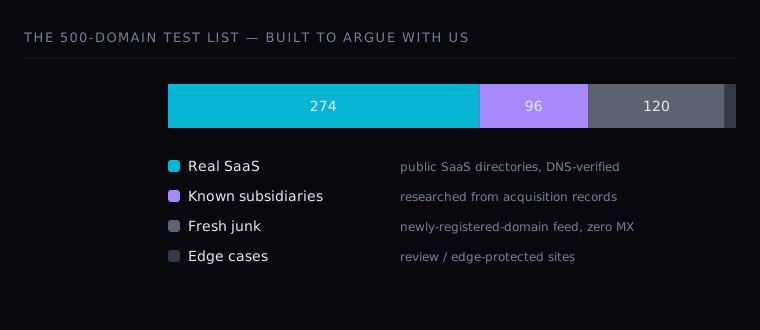
Five hundred domains is roughly a month of visitor reports for one busy client — big enough to stress the pipeline, small enough to stay boring.
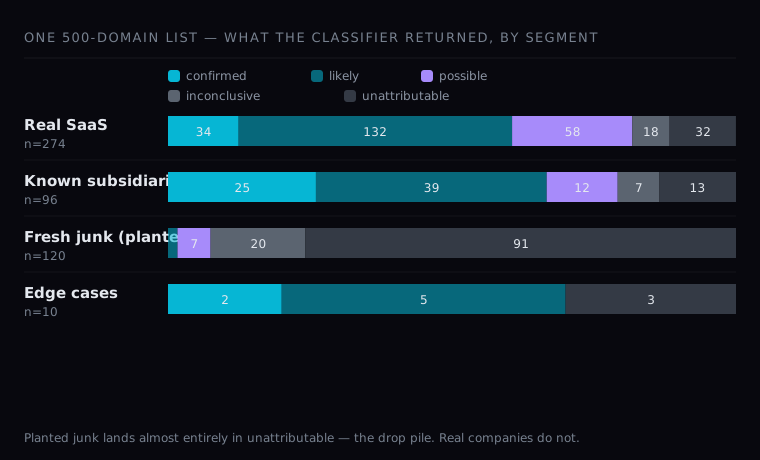
The headline numbers:
| Segment | Result |
|---|---|
| Real SaaS (n=274): operator identified with confidence | 61% (166) |
| Subsidiaries (n=96): attributed to a real operating entity | 67% (64) |
| — of which named the correct parent or operating subsidiary | 62% |
| Fresh junk (n=120): rejected outright | 93% (111) |
| Fresh junk: false positive (never rated above “likely”) | 1.7% (2) |
Three takeaways for your own lists:
The majority of real rows resolve to a named legal entity. Sixty-one percent of real companies came back with a confident operator attribution. The rest land in the caveat or review piles rather than getting dropped, because an unattributable real company is a routing decision, not a verdict of fake.
Junk dies quietly, and it almost never impersonates well. Ninety-three percent of the freshly registered lookalikes were rejected outright. Two rows out of 120 slipped to “likely” — and not one ever earned confirmed. The layer’s most confident word stayed behind the evidence, which is what keeps a false positive from reaching a rep as a sure thing.
Your rates will differ, and that is fine. This list carries far more junk than a real visitor report — we built it to stress the classifier. The number that matters is your junk-and-misroute rate, measured on your own client lists.
Abstract rates are nice. Rows are better. From the actual result set:
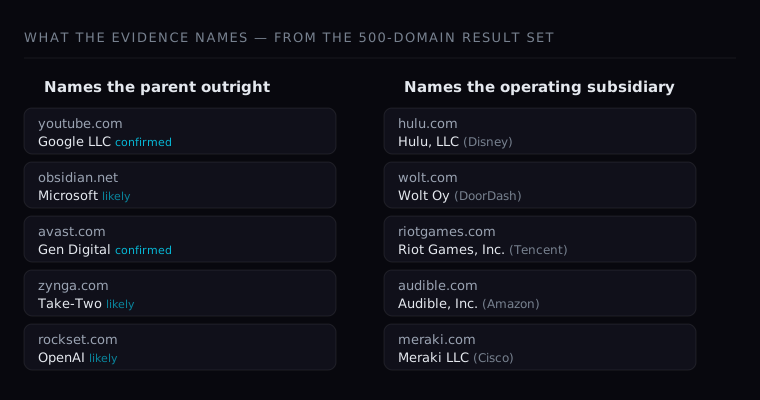
youtube.com came back named to Google LLC at the highest confidence. obsidian.net to Microsoft, avast.com to Gen Digital, rockset.com to OpenAI. A rep working the brand without the parent is pitching into the wrong org chart; territory rules keyed on the brand name route the account to the wrong owner.hulu.com came back as Hulu, LLC — the operating subsidiary, with Disney as your account-hierarchy rollup. Same for wolt.com (Wolt Oy, rolling up to DoorDash) and riotgames.com (Riot Games, rolling up to Tencent). That is the correct reading: the domain’s own evidence names the entity that operates it, and your account hierarchy does the rest.bmc.com returns BMC Software, proofpoint.com returns Proofpoint, Inc. No fund’s name appears in a registration record, and a tool that claimed otherwise would be inventing data.The whole thing is a weekly habit, not a project:
Have an investigation list ready? Analyze a domain list in the authenticated dashboard, inspect the evidence and inconclusive rows, and decide whether another batch is worth the credits.
Do not take our rates as your rates. Take last month’s actual visitor domains from one real client — the real list, not a simulation — and classify it. Then line the results up against what reps actually worked: how many worked rows had no mail configuration, how many were attributed to a subsidiary when the parent was the buying entity, how many hours went to domains under a year old. That delta is your business case, and it is the only one worth trusting, because it is yours.
Three ways to do it, none of them a project:
In the dashboard, no code. Export your visitor report as a text or CSV file, open the dashboard’s batch analysis, and upload the list — or paste domains one per line. Lists up to 50 domains show results live; larger lists run as a bulk job and email you CSV and JSON download links when they’re ready. One credit per domain, failed analyses refund automatically, and the free tier covers the first 75 — so last week’s report is the pilot.
Through the API. POST /analyze/batch accepts up to 50 domains per call and delivers results asynchronously, with signed webhooks if you want the pipeline event-driven. This is the path when classification becomes a standing step in your weekly workflow. API documentation.
Inside an agent workflow. The MCP server at https://api.whoisgeni.us/mcp exposes analyze_domain and correlate_domains, so an AI SDR or research agent can verify a domain mid-task, in seconds — no integration code, one instruction in the workflow.
The hypothesis, stated so your data can kill it: on a realistic intent-sourced list, a material share of rows should not cost a rep an hour, and at least one high-value row per client-month is attributed to the wrong legal entity. If your lists do not show that, your lists are clean — which is also worth knowing. Get an API key and classify your own list before it costs another rep-hour.
WhoisGenius fuses WHOIS, DNS, certificates, hosting, and content signals into one scored answer, with the evidence behind it.
Start free with 75 credits